
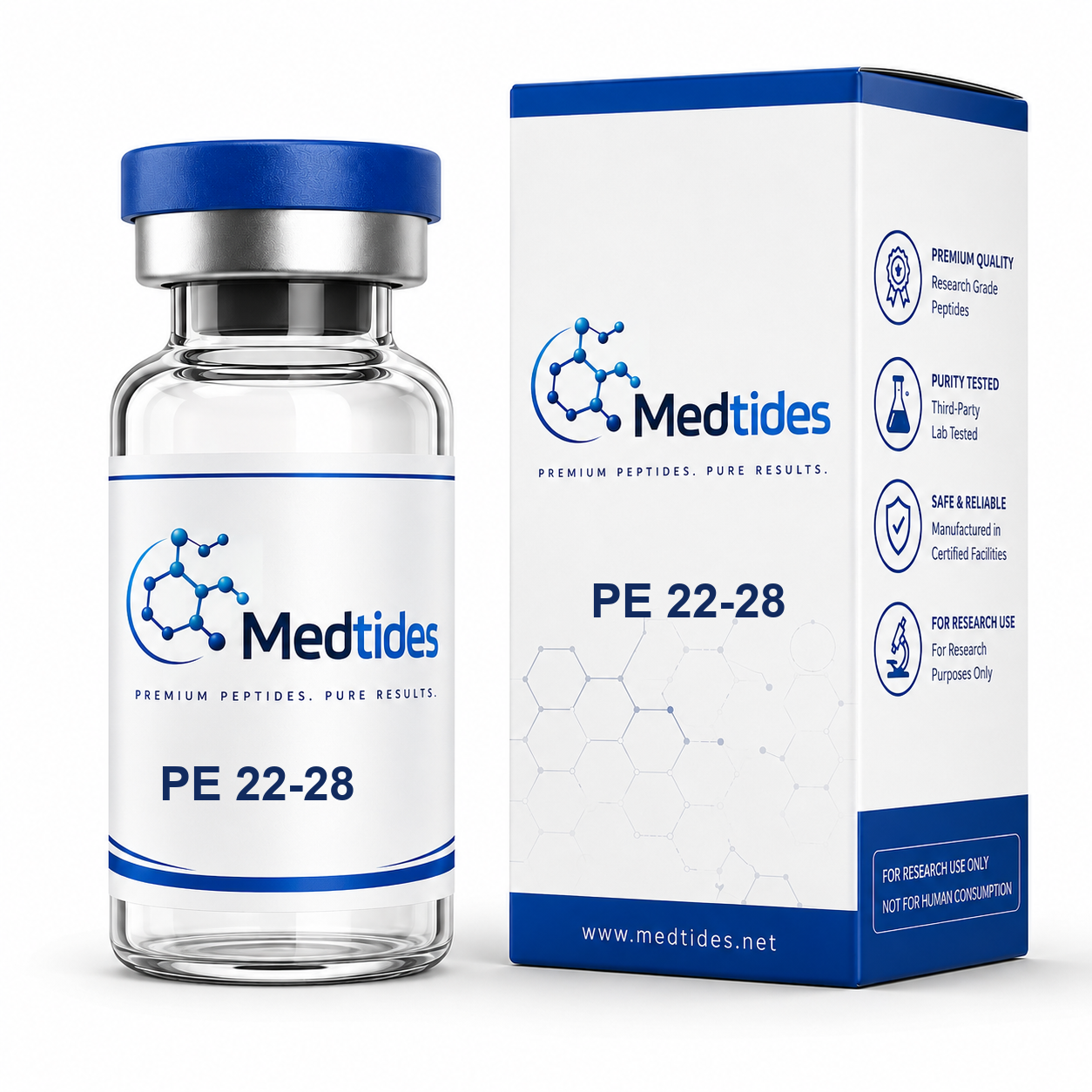
PE 22-28
Original price was: $100.00.$80.00Current price is: $80.00.
Order PE22-28 Online
Order PE22-28 Online, commonly referred to as Spadin, is a synthetic peptide that has gained considerable interest in neuroscience research because of its potential role in regulating brain function, mood, and cognitive processes. It is a shortened peptide derived from the propeptide region of sortilin, a protein involved in intracellular trafficking and neuronal signaling. Researchers have primarily studied PE22-28 for its ability to selectively inhibit the TREK-1 (TWIK-related potassium channel-1) potassium channel, a membrane protein that helps regulate neuronal excitability. By modulating TREK-1 activity, PE22-28 provides scientists with a valuable tool for investigating the biological mechanisms underlying mood disorders, neuroplasticity, and cognitive function.
The TREK-1 channel has attracted significant scientific attention because of its involvement in maintaining the resting membrane potential of neurons and regulating responses to mechanical, thermal, and chemical stimuli. Studies using animal models have shown that reducing TREK-1 activity may produce antidepressant-like effects and improve neuronal communication. Order PE22-28 Online has therefore become an important experimental compound for exploring new therapeutic approaches aimed at treating conditions such as depression, anxiety, and stress-related disorders. Unlike many conventional antidepressants that often require several weeks to produce measurable effects, preclinical research suggests that PE22-28 may induce rapid behavioral improvements in laboratory animals, making it an attractive subject for further investigation.
Another important accurate aspect of Order PE22-28 Online research involves its influence on brain-derived neurotrophic factor (BDNF), a protein essential for neuronal growth, survival, and synaptic plasticity. Increased BDNF expression is associated with improved learning, memory formation, and emotional resilience. Experimental studies indicate that PE22-28 may stimulate BDNF production and activate intracellular signaling pathways that promote neurogenesis, particularly in the hippocampus, a brain region involved in memory and emotional regulation. These findings have encouraged researchers to investigate the peptide’s potential role in supporting recovery from neurological injury and in understanding the biological basis of neurodegenerative diseases.
Beyond its potential antidepressant-like properties, PE22-28 has also been examined for its possible effects on cognition and memory. Animal studies have suggested that modulation of TREK-1 channels may enhance synaptic efficiency and facilitate communication between neurons, contributing to improved learning performance and memory retention. These observations have generated interest in exploring Order PE22-28 Onlineas a research candidate for age-related cognitive decline and disorders characterized by impaired synaptic function. However, these findings remain preliminary and require validation through carefully designed clinical studies involving human participants.
Order PE22-28 Online is typically synthesized in laboratories using solid-phase peptide synthesis techniques and is commonly supplied as a lyophilized (freeze-dried) powder. Researchers generally reconstitute the peptide using sterile laboratory-grade solvents before conducting experimental procedures. Because peptides are sensitive to environmental conditions such as temperature, moisture, and repeated freeze-thaw cycles, appropriate storage and handling are essential to maintain stability and experimental consistency. Research-grade Order PE22-28 Online is produced with high purity standards to ensure reproducibility across laboratory studies.
Despite the promising findings reported in preclinical research, PE22-28 remains an investigational compound. Most available evidence comes from cell culture experiments and animal models, while human clinical data remain extremely limited. Consequently, its long-term safety profile, optimal dosing strategies, pharmacokinetics, and therapeutic effectiveness in humans have not yet been established. Additional research, including well-controlled clinical trials, is necessary to determine whether the encouraging laboratory findings can be translated into safe and effective medical treatments.
It is important to note that PE22-28 is not approved by major regulatory authorities, such as the U.S. Food and Drug Administration (FDA) or the European Medicines Agency (EMA), for use as a prescription medication, dietary supplement, or veterinary product. It is intended solely for scientific and laboratory research purposes. Researchers continue to investigate its biological mechanisms and abundance therapeutic potential, particularly in the fields of neuroscience, psychiatry, and neurodegenerative disease research. As scientific understanding advances, PE22-28 may contribute valuable insights into the development of future treatments targeting mood disorders and cognitive dysfunction, although its clinical role has yet to be established.
Unlock the Potential of Synthetic Peptides
Order PE22-28 Online, a synthetic 7-amino-acid peptide designed to elevate your biochemical and neuroscience research. Crafted with precision, this peptide offers unparalleled reliability for scientists exploring neural pathways and biochemical reactions. Whether you’re undertaking groundbreaking experiments or refining existing methodologies, PE22-28 brings unmatched consistency and flexibility to your research toolkit.
Why Choose PE22-28 for Your Research?
PE22-28 is tailored for laboratory excellence. With its synthetic composition of seven amino acids, this peptide is specifically engineered to meet the unique demands of neuroscience studies. Its robust structure ensures dependability in diverse experimental setups, making it a preferred choice for researchers worldwide. Dive deeper into neural mechanisms and achieve accurate, repeatable results effortlessly!
Effortless Ordering & Reliable Quality
Tired of complex procurement processes? Enjoy a seamless experience when you order PE22-28 online. Prioritizing both efficiency and quality, we ensure your research materials arrive promptly and adhere to the highest manufacturing standards. With PE22-28, you focus on what truly matters: advancing scientific knowledge and unlocking new discoveries in the field of neuroscience.
Be the first to review “PE 22-28”
Related products
PEPTIDES PRODUCTS
PEPTIDES PRODUCTS
PEPTIDES PRODUCTS
PEPTIDES PRODUCTS
PEPTIDES PRODUCTS
PEPTIDES PRODUCTS
PEPTIDES PRODUCTS
PEPTIDES PRODUCTS
Reviews
There are no reviews yet.