
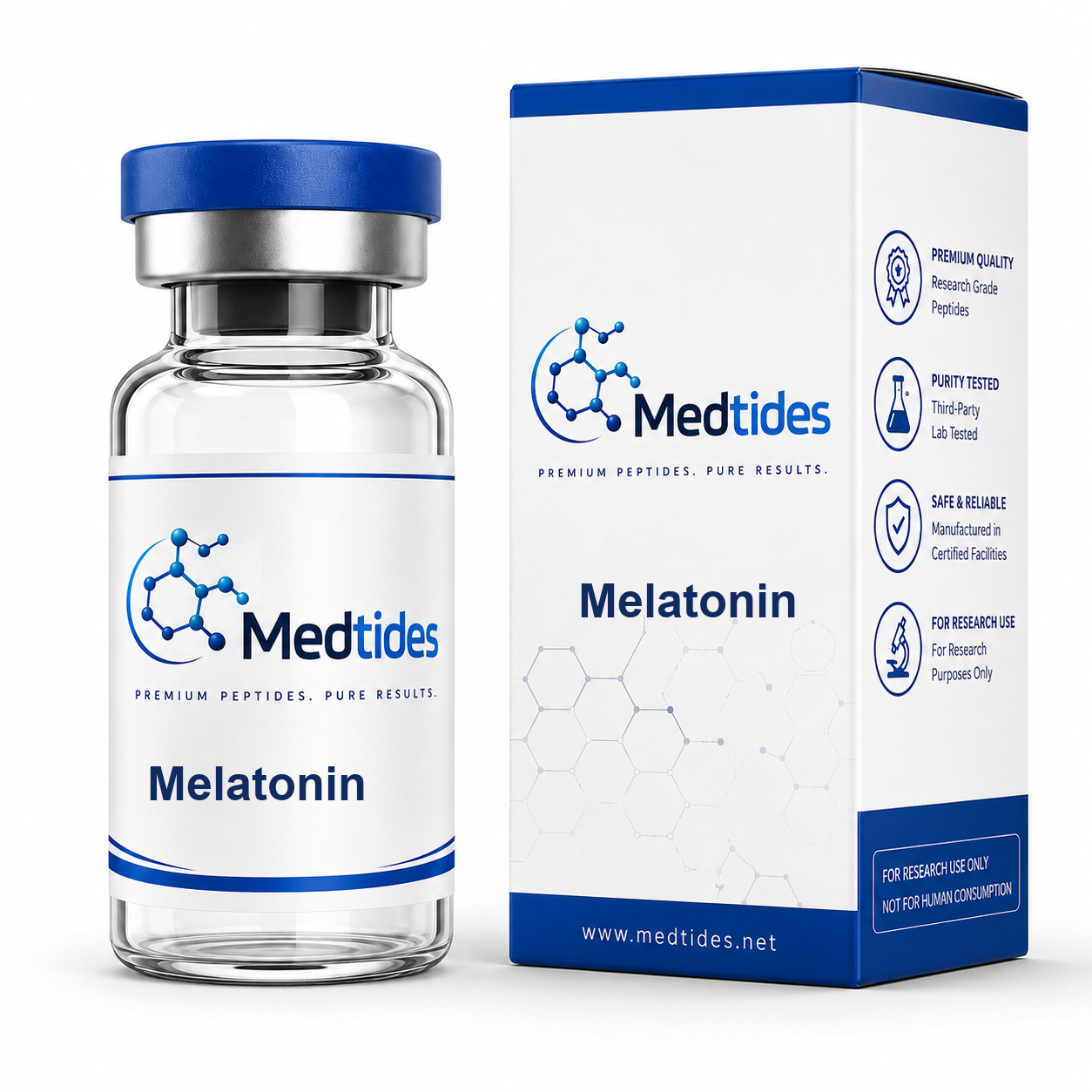
Melatonin 1

Original price was: $100.00.$80.00Current price is: $80.00.
1. over view
Melatonin is a naturally occurring hormone that plays an important role in regulating the body’s internal biological clock, particularly the sleep–wake cycle. It is produced primarily by the pineal gland, a small structure located near the center of the brain. Melatonin production is closely connected to the daily light–dark cycle: levels generally rise in the evening as darkness approaches and decrease during daylight. Through this process, melatonin helps the body recognize when it is nighttime and prepares it for sleep.
Melatonin is closely associated with the body’s circadian rhythm, which is the approximately 24-hour cycle controlling various physiological and behavioral processes. The brain’s main biological clock is located in a region called the suprachiasmatic nucleus (SCN) of the hypothalamus. The SCN receives information about light through the eyes and uses this information to coordinate daily rhythms throughout the body. When evening darkness is detected, signals from the SCN ultimately stimulate the pineal gland to produce and release more melatonin. Exposure to light, particularly at night, can suppress this production.
Chemically, melatonin is known as N-acetyl-5-methoxytryptamine. It is synthesized from the amino acid tryptophan through a pathway involving serotonin. Specialized cells called pinealocytes within the pineal gland carry out the final stages of melatonin production. Once released, melatonin interacts with specific receptors, particularly MT1 and MT2 receptors, helping communicate information about the timing of night and influencing circadian processes.
Although it is commonly called the “sleep hormone,” its primary role is more accurately described as helping regulate the timing of sleep and the circadian system rather than simply causing sleep. Natural melatonin production provides the body with a signal that it is nighttime. This distinction is important because a person’s ability to sleep also depends on many other factors, including sleep pressure, stress, environment, lifestyle, and overall health.
Melatonin is also available as a dietary supplement and is widely used for sleep-related purposes. Research suggests that melatonin may be particularly useful for certain circadian-rhythm problems, including jet lag, delayed sleep phase disorder, and sleep difficulties associated with shift work. It may also help some people fall asleep more quickly. However, evidence for its effectiveness in chronic insomnia is less consistent, and some clinical guidelines have recommended against routinely using melatonin as a treatment for chronic insomnia because of insufficient evidence.
One of the most important characteristics of melatonin supplementation is that timing can matter. Because melatonin interacts with the body’s circadian clock, taking it at an inappropriate time may have less benefit or potentially shift the body’s sleep schedule in an undesired direction. For this reason, its use for circadian-rhythm problems is generally different from simply taking a supplement immediately before bed.
It is generally considered relatively safe for short-term use, but its long-term safety has not been firmly established. Possible side effects can include headache, dizziness, drowsiness, and other unwanted effects. There are also concerns about accidental ingestion and overdose in children, particularly because melatonin products are often available without a prescription in some countries.
we offer the best and always the best in every way to make our customers happy and our products are always 99.99% good in its contents.
Conclusion
melatonin is an important hormone that connects the body’s internal clock with the external light–dark environment. By increasing during darkness and decreasing with light, it helps regulate the timing of sleep and other circadian processes. While melatonin supplements can be useful in specific situations such as jet lag and certain circadian-rhythm disorders, they should not be viewed as a universal solution for every sleep problem. Understanding its biological role, appropriate timing, potential benefits, and limitations is essential when considering melatonin as a supplement or therapeutic option.
- Melatonin is a naturally occurring hormone that plays an important role in regulating the body’s internal biological clock, particularly the sleep–wake cycle. It is produced primarily by the pineal gland, a small structure located near the center of the brain. The production is closely connected to the daily light–dark cycle: levels generally rise in the evening as darkness approaches and decrease during daylight. Through this process, it helps the body recognize when it is nighttime and prepares it for sleep
Be the first to review “Melatonin 1”
Related products

PEPTIDES PRODUCTS
PEPTIDES PRODUCTS

PEPTIDES PRODUCTS
PEPTIDES PRODUCTS

PEPTIDES PRODUCTS
PEPTIDES PRODUCTS

PEPTIDES PRODUCTS

PEPTIDES PRODUCTS
Reviews
There are no reviews yet.