
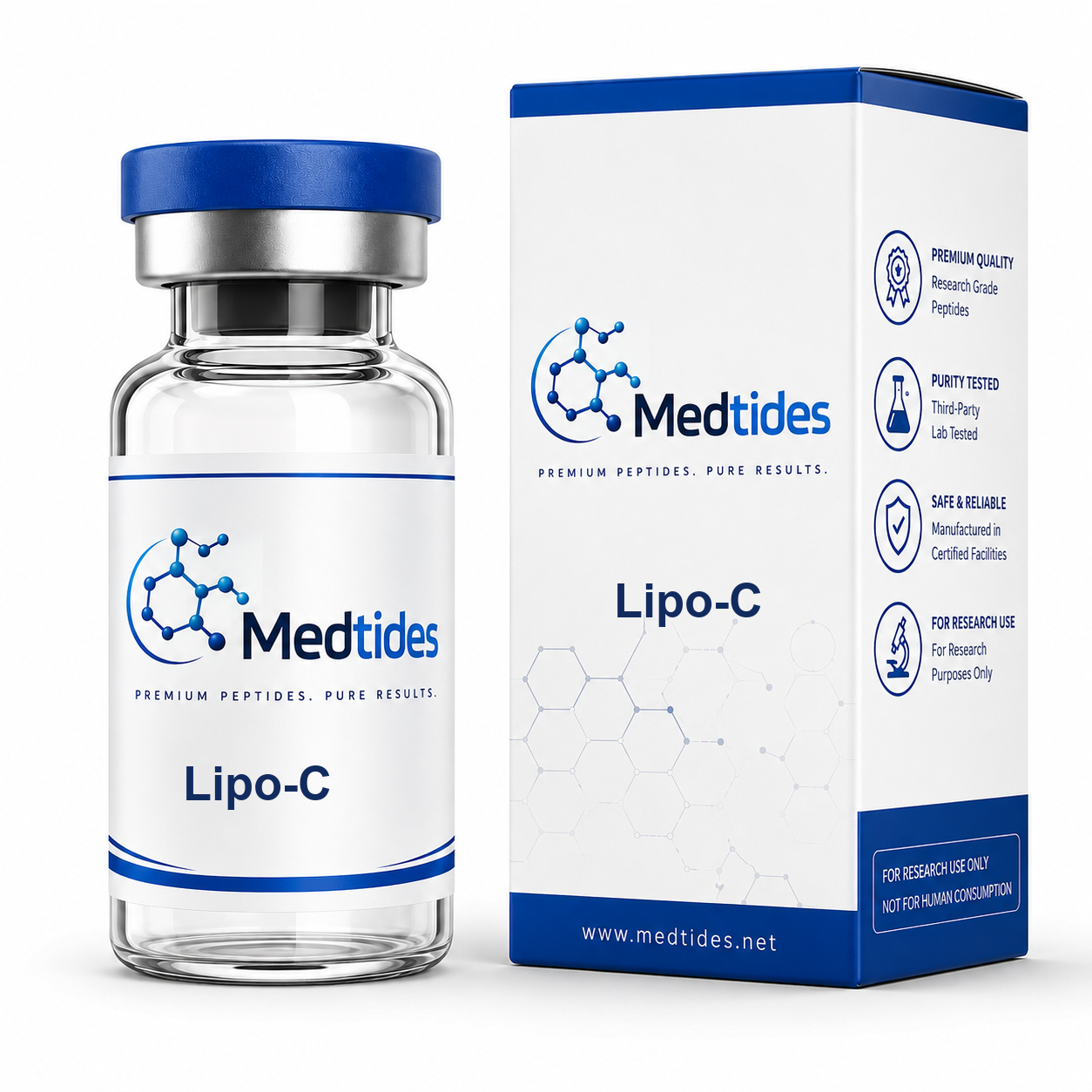
Lipo-C1
Original price was: $100.00.$85.00Current price is: $85.00.
Lipo-C: Description, Composition, Uses, Benefits, and Safety
Lipo-C is a name commonly used for a class of lipotropic injections containing combinations of nutrients and compounds intended to support normal fat and energy metabolism. Unlike a single standardized pharmaceutical ingredient, “Lipo-C” is generally a formulation name, meaning that the exact composition can vary between manufacturers, pharmacies, and countries. Common formulations may contain methionine, inositol, choline, and sometimes vitamin B12 or other B vitamins. For example, FDA records describe compounded injectable products containing methionine, inositol, choline, and methylcobalamin, while other compounded formulations have used methionine, choline chloride, inositol, and methylcobalamin. (U.S. Food and Drug Administration)
The term “lipotropic” refers broadly to substances involved in the metabolism or transport of fats. The idea behind Lipo-C is that its constituent nutrients participate in biochemical pathways involved in lipid transport, methylation, cellular metabolism, and normal liver function. Lipo-C is therefore frequently marketed in wellness and weight-management settings as a nutritional injection intended to complement diet, exercise, and broader lifestyle measures.
It is important to distinguish this concept from the claim that Lipo-C is itself a powerful fat-burning drug. Evidence supporting injectable Lipo-C as a treatment for obesity or as an independent weight-loss therapy is limited. The presence of nutrients involved in metabolism does not necessarily mean that injecting them causes substantial loss of body fat in otherwise well-nourished people.
What Is Typically Found in Lipo-C?
There is no single universal Lipo-C formula. The ingredients depend on the specific product.
Methionine
Methionine is an essential amino acid, meaning that humans must obtain it from dietary sources because the body cannot synthesize enough of it on its own. It participates in protein synthesis and is also an important source of methyl groups through the methionine cycle.
Methionine is closely connected with S-adenosylmethionine (SAMe), a compound involved in numerous methylation reactions throughout the body. These reactions influence proteins, nucleic acids, neurotransmitters, and other biological molecules.
In lipotropic formulations, methionine is included because of its relationship with normal hepatic metabolism. The liver plays a central role in processing fats, carbohydrates, proteins, medications, and other substances.
Inositol
Inositol, particularly myo-inositol, is a naturally occurring carbohydrate-like compound involved in cellular signaling. It contributes to the structure of cell membranes and participates in signaling pathways associated with insulin and other hormones.
Research on oral inositol supplementation has investigated potential effects on metabolic and cardiometabolic parameters. A 2025 systematic review and meta-analysis of randomized controlled trials reported possible improvements in measures including insulin resistance and some lipid parameters, but also emphasized substantial heterogeneity and limitations in the available evidence. Importantly, these findings concern inositol supplementation generally, not proof that injectable Lipo-C produces the same effects. (PubMed)
Choline
Choline is an essential nutrient involved in cell-membrane structure, neurotransmitter synthesis, lipid transport, and normal liver function. One of its important roles is in the production of phosphatidylcholine, a major component of cell membranes and lipoproteins.
Adequate choline is particularly important for normal hepatic lipid handling. This is one reason choline is commonly included in products described as lipotropic.
Vitamin B12 and Other Ingredients
Some Lipo-C formulations contain methylcobalamin, a form of vitamin B12. Other products may contain additional B vitamins, amino acids, minerals, or compounds such as carnitine.
Consequently, consumers should not assume that every Lipo-C product has the same ingredients or concentrations. The actual product label and pharmacy/manufacturer documentation should be used to determine what a particular formulation contains.
How Lipo-C Is Intended to Work
The concept behind Lipo-C is based on supporting several interconnected metabolic pathways rather than directly stimulating fat breakdown in the way that certain prescription weight-management medicines can.
The liver is a major metabolic processing center. Dietary fats are digested and transported through the body, while fatty acids can be stored, oxidized for energy, or incorporated into other molecules. Choline and methionine participate in pathways associated with the handling and transport of lipids, while inositol contributes to cellular signaling.
This is why Lipo-C is often described as a metabolic-support formulation rather than a conventional stimulant or appetite suppressant.
However, an important scientific distinction should be maintained: a nutrient being essential for normal metabolism does not establish that administering additional amounts above nutritional requirements will accelerate fat loss. Marketing language surrounding lipotropic injections can sometimes go considerably further than the available clinical evidence.
Commonly Promoted Uses
Lipo-C is commonly associated with weight-management and wellness programs. It may be offered by some clinics as an adjunct to nutritional counseling, exercise programs, or other weight-management interventions.
Potentially promoted purposes include:
- Supporting normal fat metabolism
- Supporting liver metabolism
- Complementing a weight-management program
- Supporting energy metabolism
- Providing nutrients such as vitamin B12 when indicated
- Supporting general nutritional status
These uses should be interpreted carefully. Lipo-C should not be presented as a replacement for a calorie-controlled diet, physical activity, appropriate sleep, or evidence-based treatment for obesity.
There is also a major difference between correcting a nutritional deficiency and giving additional nutrients to someone whose nutritional status is already adequate. If a person is deficient in vitamin B12, for example, replacing that deficiency can provide important health benefits. That does not mean that B12 injections necessarily produce weight loss in someone who has normal B12 levels.
Lipo-C and Weight Loss
Weight loss occurs when energy expenditure exceeds energy intake over time, although body weight is influenced by numerous physiological, behavioral, and environmental factors. Lipo-C does not have the same established mechanism or evidence base as modern prescription anti-obesity medications that act on appetite and metabolic hormone pathways.
The word “lipotropic” can create the impression that these injections directly melt or dissolve body fat. That description is misleading. Lipotropic nutrients are involved in normal lipid metabolism, but that is different from demonstrating clinically meaningful fat loss following an injection.
Some people receiving Lipo-C may report improved energy or progress with a broader wellness program. Such experiences can have multiple explanations, including changes in diet, exercise, calorie intake, sleep, other medications, or placebo effects. They should not automatically be attributed to the injection itself.
Administration
Lipo-C formulations marketed for clinical use are commonly provided as injectable preparations, although the precise route and formulation depend on the specific product. Injectable products require considerably greater quality and safety controls than ordinary dietary supplements because they bypass many of the body’s natural barriers.
For that reason, injectable Lipo-C should only be used according to the instructions associated with the specific prescribed or professionally supplied formulation. A generic internet dosing schedule should not be substituted for product-specific medical guidance.
The concentration of one Lipo-C formulation can be completely different from another. A statement such as “10 mL Lipo-C” therefore does not tell you how much methionine, inositol, choline, or B12 is actually present. The concentration and amount of each ingredient are what determine the actual dose.
Safety Considerations
The safety profile of Lipo-C depends heavily on its ingredients, concentrations, route of administration, manufacturing quality, and the person receiving it.
Possible injection-related problems include pain, redness, swelling, bruising, irritation, or infection. Allergic or hypersensitivity reactions are also possible.
FDA materials discussing compounded products containing choline, methionine, and inositol have documented adverse-event reports associated with multi-ingredient weight-loss injections, including gastrointestinal symptoms and injection-site reactions, although FDA noted that causality was difficult to determine because some individuals were taking multiple substances. (U.S. Food and Drug Administration)
The quality of compounded injectable products is another important consideration. FDA inspection records have identified problems involving sterility testing, stability programs, labeling, and other quality-control practices for some compounded injectable products, including formulations containing methionine, choline, inositol, and related ingredients. These observations do not mean that every compounded Lipo-C product is unsafe; rather, they illustrate why the source and quality controls of an injectable product matter greatly. (U.S. Food and Drug Administration)
People with medical conditions, allergies, pregnancy, or those taking prescription medications should discuss the ingredients with an appropriate healthcare professional before use.
Storage
Storage requirements for Lipo-C depend on the specific formulation and manufacturer’s or compounding pharmacy’s stability data. There is no universally appropriate storage temperature for every product sold under the Lipo-C name.
Some compounded formulations have been labeled for refrigeration, while FDA inspection records have identified cases in which refrigeration requirements and beyond-use dating were not adequately supported or followed. (U.S. Food and Drug Administration)
Therefore, the safest approach is to follow the storage instructions printed on the actual product label. The product should generally remain in its original container, protected from inappropriate environmental conditions, and should not be frozen unless the specific manufacturer explicitly states that freezing is acceptable.
If an injectable product has been exposed to excessive heat, accidentally frozen, stored outside its labeled conditions, or has an unusual appearance, it should not simply be assumed to remain safe for injection. The dispensing pharmacy or manufacturer should be contacted for product-specific guidance.
Lipo-C Compared With Other Weight-Management Products
Lipo-C occupies a very different category from modern prescription weight-management medicines.
Prescription metabolic therapies may act directly on hormonal pathways involved in appetite, glucose regulation, and energy balance. Lipo-C, by comparison, is generally a nutrient-based lipotropic formulation.
This distinction is important because consumers may encounter Lipo-C alongside products such as GLP-1 receptor agonists and other metabolic therapies in wellness clinics. They should not be assumed to have comparable clinical evidence, effectiveness, mechanisms, or regulatory status.
Lipo-C also should not be confused with L-carnitine injections, GLP-1 medications, B12-only injections, or other compounded wellness formulations. Similar marketing language can make these products appear interchangeable even though their pharmacology and evidence can be very different.
Research and Clinical Evidence
The individual components of Lipo-C have legitimate biological functions and have been extensively studied in nutrition and metabolism. The challenge is establishing whether a particular combination delivered by injection produces clinically meaningful benefits beyond what would be expected from adequate nutrition.
Evidence for individual nutrients cannot automatically be transferred to the entire combination. For example, research showing that inositol can influence insulin-related measures does not establish that an injectable methionine/inositol/choline formulation causes significant weight loss.
Likewise, the fact that choline participates in lipid transport does not establish that additional injectable choline causes accelerated fat burning.
This distinction between biological plausibility and clinical evidence is essential when evaluating Lipo-C.
Who May Consider It?
Lipo-C may be considered by healthcare professionals as part of certain individualized wellness or nutritional programs, particularly when the clinician has a specific reason to use its components.
However, it should not be regarded as a universal treatment for obesity, fatty liver disease, fatigue, or metabolic disorders. Those conditions can have numerous underlying causes and may require laboratory evaluation and evidence-based treatment.
Anyone considering an injectable formulation should first establish exactly what is in the product, who manufactured or compounded it, whether it is appropriately regulated in their jurisdiction, how it should be administered, and what evidence supports its intended use.
Final Perspective
Lipo-C is best understood as a lipotropic nutrient formulation rather than a conventional fat-burning drug. Its commonly used ingredients—methionine, inositol, and choline, sometimes accompanied by vitamin B12 or other nutrients—each have important roles in normal human metabolism.
Its appeal comes from the idea of providing metabolic building blocks directly through an injectable formulation. In practice, however, the scientific evidence for Lipo-C as an independent weight-loss treatment is considerably less established than the marketing surrounding lipotropic injections may suggest.
The most important issue is therefore not simply whether Lipo-C “works,” but what specific formulation is being used and for what purpose. Different products can contain different ingredients and concentrations, and injectable products require appropriate sterility, stability, storage, and quality controls.
For someone pursuing weight management, Lipo-C is most appropriately viewed as a possible adjunct within a broader healthcare strategy rather than a substitute for nutrition, physical activity, or medically indicated treatment. Its components have genuine biological functions, but those functions should not be confused with proof of dramatic fat loss.
Ultimately, responsible use requires transparency about ingredients, realistic expectations about benefits, attention to potential adverse effects, and use of a properly manufactured or compounded product obtained through an appropriate healthcare channel. The distinction between nutritional support, wellness marketing, and clinically demonstrated treatment is particularly important when evaluating Lipo-C or any other injectable metabolic product.
Lipo-C
Be the first to review “Lipo-C1”
Related products
PEPTIDES PRODUCTS
PEPTIDES PRODUCTS
PEPTIDES PRODUCTS
PEPTIDES PRODUCTS

PEPTIDES PRODUCTS
PEPTIDES PRODUCTS
PEPTIDES PRODUCTS

PEPTIDES PRODUCTS
Reviews
There are no reviews yet.